


As the US election approaches, the financial landscape becomes increasingly uncertain, with pundits and prediction markets split on the potential outcomes. While it's tempting to make investment decisions based on political expectations, historical trends offer valuable insights into market behavior before, during, and after presidential elections.
Understanding Historical Trends
Analyzing historical election outcomes and their subsequent impact on market performance reveals intriguing patterns. While elections often dominate headlines and stir speculation, the data shows that the market tends to exhibit positive returns three months after the election, irrespective of which party assumes power in the White House or Congress. Historically, the stock market experiences elevated volatility in the months leading up to a presidential election due to uncertainty, highlighting the importance of remaining objective as investors.
Historical Election Outcome Scenarios and Market Performance
Various scenarios, including one-party control and divided government, have historically shown mixed results in terms of market performance. While some periods see slightly higher returns under certain political configurations, the differences are not statistically significant. Ultimately, economic factors and market fundamentals exert a more substantial influence on long-term investment outcomes than short-term political dynamics.

The Limited Impact of Presidential Party on Market Returns
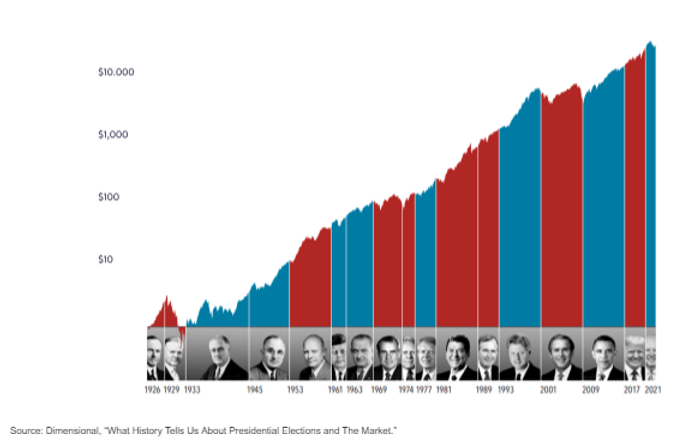
Despite the heightened attention surrounding elections, historical data suggests that the party in power has little impact on the long-term performance of markets. The graph below illustrating the hypothetical growth of $1 invested in the S&P 500 from 1926 through 2022 demonstrates the market's resilience over time, regardless of presidential administrations.
Aspen Investment Management Can Help Prepare your Portfolio for Election Year Resiliency
As investors navigate the uncertainties surrounding the US election, maintaining a disciplined investment approach is paramount. While elections may create short-term turbulence, it is important to avoid knee-jerk reactions and focus on fundamental principles and long-term investment goals. Additionally, seeking guidance from a financial advisor can help navigate market uncertainties and ensure a balanced investment strategy. At Aspen Investment Management, we stand ready to guide our clients through market fluctuations and identify strategic investment opportunities in any political climate. Schedule a meeting with us today by reaching out via our website or call (616)-361-2500.
.jpg)